

Uludiş Implant Treatment
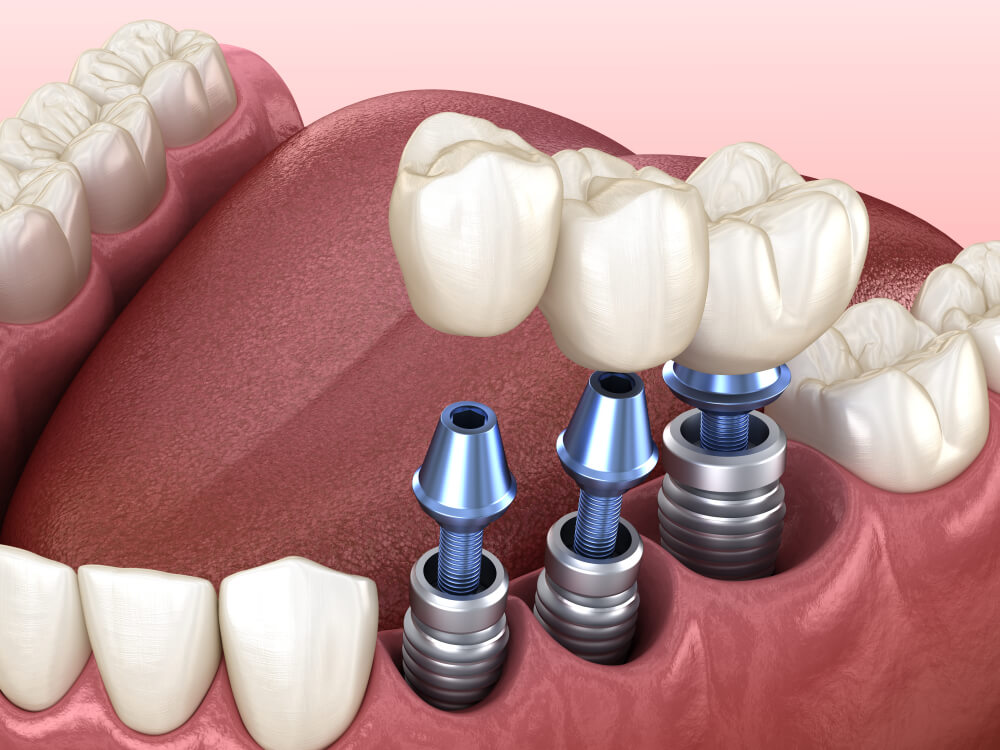
Implants are artificial tooth roots made of titanium or titanium alloys, which are the most suitable alternative for your teeth to replace missing teeth for various reasons. Healthy teeth can also be made without any procedure on neighboring teeth in case of tooth deficiency. Implants are accepted by body tissues and are extremely durable, advanced technology products made of titanium. Implants are suitable for lifetime use, except in exceptional cases.
The quality of the bone is one of the factors that affects the success of the implant. In addition, the periodontal tissue must be completely healthy before the treatment and during the time the implant remains in the mouth.
The quality of the bone is one of the factors that affects the success of the implant. It is also necessary for the periodontal tissue to be completely healthy before and during the time the implant is in the mouth. During the implant procedure, the bone structure is an important factor. The dentist should have a suitable bone structure for the implant. The bone tissue should be determined by expert doctors and the implant should be planned accordingly. It is necessary to have a clinical examination before the implant procedure.
Implant treatment is suitable for people of all ages as long as their bone structure and health condition are suitable. Implant treatment is not usually preferred for very young patients who have not fully completed bone development.
If the person's bone structure and health condition are suitable for the implant, there is no upper age limit. Implants are not preferred for very young patients whose bone development is not complete. In cases where the treatment has been completed smoothly, patients feel comfortable enough not to even feel the presence of the implants. During the implant procedure, the patient can choose to use general or local anesthesia.
During the healing period of the first 3-6 months after the implant treatment, it is necessary to maintain the health of the gums and to minimize the load on the implant in order to ensure that the implant fully integrates with the bone.
During the early healing period, particularly, smoking can increase the risk of infection. Therefore, it is not recommended to smoke during this time.
If the treatment of infected areas in the tooth progresses, it can lead to infection of the infected tooth nerves and cause toothache complaints and eventually loss of the tooth. Inflammation of the tooth nerves can cause toothache complaints and eventually loss of the tooth.
The tooth nerve removed from the tooth does not have vital importance for the tooth's health and function, it prevents the person from feeling pain. It is only a sensory nerve used for the perception of heat and cold. If treatment is not applied, abscesses may form due to infection of the surrounding tissue of the tooth.
After root canal treatment, sensitivity or pain during chewing may be seen in the tooth for a few days. This is a normal condition after root canal treatment. Teeth may turn brown, pink or grey in color due to trauma or as a result of root canal treatment. If the color change is due to trauma, the tooth is first treated with root canal treatment and then whitening is performed. If the color change occurs after root canal treatment, the tooth is examined by taking an x-ray. If there is no problem with the root canal treatment, whitening is performed. If this is not the case, the root canal treatment is first renewed and then the whitening process begins.
The success rate of root canal treatments performed by an endodontist using the correct method is as high as 98%. Root canal treatment is a method that can be performed by dentists in our country and around the world. Those who have received postgraduate education in this field are called Endodontists. General dentists work in collaboration with Endodontists and seek assistance when necessary to ensure the best treatment for their patients.