
How does excessive sugar consumption in childhood affect children's oral health and overall health?
The consumption of sugar in childhood is a subject surrounded by many different opinions. Some parents are completely opposed to sugar, while others believe that it is an acceptable option for calming or rewarding children in certain situations. A balance can be struck between the views of the two groups. However, while most children definitely enjoy sweets, the truth is that excessive sugar has negative effects on children's oral health. In this article, we will discuss how excessive sugar consumption affects children's oral health, the effects of milk teeth decay on children's general health, and recommendations for the amount of sugar to be consumed in childhood.
How Does Excessive Sugar Consumption Affect Children's Oral Health?
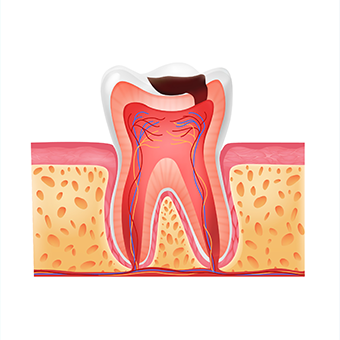
Excessive sugar consumption is a risk factor for both adults' and children's oral health. Excessive sugar consumption is one of the main factors for tooth decay. When we consume sugar, cariogenic bacteria (tooth decay-causing bacteria) accumulate on our tooth surface and form plaque. Over time, this plaque increases the porosity of the tooth surface and causes more acid production. This increase in acidity lowers the pH level in the mouth and slowly dissolves the tooth enamel, resulting in tooth decay. Milk teeth (primary teeth) cavities, which are often not noticed for a long time or are not treated because it is thought that permanent teeth will replace them, not only threaten the health of the other healthy milk teeth, but also can cause infections that can affect the permanent teeth that are still under the milk teeth, cause color and form abnormalities in the permanent teeth, or result in early loss of milk teeth in some cases where cavities are very advanced. Milk teeth serve as a guide for permanent teeth, making room for them and directing them to the appropriate position in the mouth. Therefore, early loss of milk teeth may also increase the likelihood of these children needing orthodontic treatment in later years.
How Does Excessive Sugar Consumption Affect Children's General Health?
The direct consequences of tooth decay are infection and pain. Severe pain during chewing can affect the nutrition of children, and can even have negative effects on their growth and development over time. Some studies have shown that children with a high number of cavities have less weight than expected for their age, and that children with tooth pain can reach their expected weight after their cavities are treated. (Acs et al 1999, Acs et al 1992) (Elice & Fields 1990) Pain during chewing can lead to inadequate nutrition, but on the contrary, swallowing food without grinding it properly due to pain can also lead to weight problems in children at an early age. In addition to nutrition, tooth decay can also cause sleep disorders, which can cause growth and development disorders in children over time, and in school-age children, attention can be scattered during the day and classes, and can even cause a drop in normal performance. Finally, the most sensitive consequences may be on children's social life. Milk teeth play an important role in giving aesthetically pleasing face shapes to the face. Therefore, the loss of milk teeth for any reason can affect children emotionally and socially. The appearance of an aesthetic appearance due to tooth decay can cause a lack of self-confidence in children and can prevent social skills from developing sufficiently due to reluctance to communicate with friends.
Suggestions for Sugar Consumption Amounts for Childhood
According to the latest guidelines published by the World Health Organization (WHO), both adults and children should keep their daily sugar intake below 10% of total energy intake. WHO's Director of the Department of Nutrition for Health and Development, Dr. Francesco Branca, says, "We have strong evidence that limiting free sugar intake to less than 10% of total energy intake reduces the risk of excessive weight, obesity, and tooth decay." WHO also emphasizes that keeping this intake below 5% can provide additional health benefits. The Dietary Guidelines for Americans (DGA) for 2020-2025 also recommend limiting daily sugar intake to less than 10% for all individuals and not giving any added sugar-containing foods to children under 2 years old. The National Health Service (NHS) recommends that children aged 4-6 years should not have more than 19 grams (about 5 cubes) of free sugar per day and that children aged 7-10 years should have this intake limited to 24 grams (about 6 cubes). In summary, although there is no consensus on the exact amount of sugar intake that should be allowed in childhood, it is still advisable to limit as much as possible and restrict added sugar-containing foods as much as possible for children.
Kaynaklar
https://www.colgate.com/tr-tr/oral-health/brushing-and-flossing/how-to-brush/
https://www.ada.org/resources/research/science-and-research-institute/oral-health-topics/floss
https://www.adansw.com.au/About/ADA-NSW-Fact-Sheet-How-Often-You-Should-See-a-Dent.aspx